Full article · LinkedIn
How Artificial Intelligence Is Reshaping Corporate Sustainability
AI has environmental costs, but it is also changing how companies measure, model, and manage sustainability work.

The Machines That Learn—and Burn
We often talk about artificial intelligence some sort of harbinger of progress: faster insights, smarter decisions, cleaner systems. But there is a quiet irony in the way AI, a tool marketed to optimize the world, is consuming it—bit by bit, watt by watt.
By 2030, the energy demand of AI-specific data centers is projected to rival the consumption of entire industrialized nations like Japan. Training a single generative AI model can require as much electricity and water as hundreds of households. Microsoft, long vocal about its climate commitments, reported a 30% increase in carbon emissions since 2020, largely due to AI and cloud infrastructure expansion.
Yet even within that contradiction lies a possibility: that the same system threatening to overheat the planet might also be the one to stabilize it—if wielded with precision, purpose, and a refusal to let complexity become excuse.
Reporting Gets Smarter: AI and the CSRD Mandate
Corporate sustainability isn’t just good PR anymore—it’s law. The Corporate Sustainability Reporting Directive (CSRD), enforced across the EU beginning in 2023, has expanded ESG (Environmental, Social, Governance) disclosure requirements to more than 50,000 companies, including those outside the EU with significant business inside it.
What makes CSRD distinctive is its principle of double materiality—companies must report not only how climate risks affect them financially, but how they in turn affect the climate, the environment, and society.
AI is quickly becoming the scaffolding beneath this architecture of accountability. Platforms like FINGREEN AI offer automated tools that assess double materiality, scrub vast datasets, and align corporate disclosures with the European Sustainability Reporting Standards (ESRS). Microsoft is rolling out its own AI-powered tools to streamline compliance, promising to simplify what was once a manual, error-prone labyrinth of reporting.
This isn’t just digital convenience. It’s infrastructure for transparency. And in an era where greenwashing is as common as it is corrosive, that matters.
From Static Metrics to Living Data
Traditional sustainability reports are like yearbooks—retrospective, curated, and too often obsolete by the time they’re published. AI changes that.
By integrating real-time monitoring with machine learning algorithms, companies can now generate continuous sustainability insights. Smart sensors, paired with AI, track everything from energy consumption and supply chain emissions to deforestation and labor practices.
A 2024 study found that AI can automate up to 80% of ESG data collection, making it faster, more comprehensive, and more difficult to manipulate. Platforms integrating natural language processing (NLP) can even sift through external reports, news coverage, and social media for reputation risks or violations.
This isn't just about efficiency. It's about creating sustainability data that breathes—that moves with the pace of the world it describes.
Architecture, Reimagined: Smarter Buildings, Smaller Footprints
AI's impact isn't limited to boardrooms and reporting dashboards. It’s quietly reshaping the built environment itself.
In New York City, the building at 45 Broadway implemented BrainBox AI’s learning-based HVAC control system and saw a 15.8% drop in energy consumption, saving $42,000 annually and reducing emissions by 37 metric tons. Across commercial real estate, AI is projected to enable 8–10% energy reductions, simply by predicting and adjusting usage patterns dynamically.
As the urban landscape becomes more digitized, these micro-adjustments at the building level—smart lighting, AI-managed ventilation, energy forecasting—accumulate into macro wins.
The Burden of Intelligence
But the promise of AI carries a shadow.
Training large language models and generative systems requires massive computational effort—weeks of constant processing on specialized GPUs, often powered by carbon-heavy grids. The cooling systems to maintain these data centers gulp millions of gallons of water, intensifying strain on freshwater systems already impacted by climate change.
A report from MIT in early 2025 highlighted the uncomfortable truth: "the environmental costs of AI scale faster than its benefits if unchecked." The very tools we depend on for sustainability may be undermining it—unless designed and deployed more responsibly.
Greener Futures, If We Choose Them
Some researchers and organizations are taking this paradox seriously. Initiatives like Zero-Waste Machine Learning (from the ELLIS Unit in Warsaw) and Earth-Friendly Computation by Keolu Fox emphasize leaner algorithms, open-source model sharing, and running models on renewable-powered hardware.
Meanwhile, NGOs like CTrees are combining satellite imagery and machine learning to track deforestation in near real-time—tools that governments and corporations alike can use to inform reforestation strategies or policy enforcement.
At Stanford and Cornell, major NSF-funded programs are pairing AI with environmental science to tackle everything from climate modeling to low-carbon materials design. AI, in this context, isn’t the solution. It’s the tool that sharpens our ability to see the solution more clearly.
A System Worth Training
AI will not save us. But it might help us save ourselves—if we learn to train it as we train ourselves: toward clarity, toward accountability, toward a kind of intelligence that does not just accumulate knowledge, but uses it wisely.
That means reckoning with the environmental costs of computation. It means embedding sustainability into the code itself—not as an afterthought, but as a condition of the system’s existence.
Because in a world increasingly shaped by algorithms, sustainability cannot be optional logic. It has to be hard-coded into the machine.
About this project
See the assignment, process, and my contribution.
I researched and wrote the technology-and-sustainability explainer independently.
Related work
Continue through the subject.

Carbon Offsets Are Dead. Long Live Carbon Insetting.
Why carbon offsets have lost credibility—and why investing inside a company’s own value chain may be more accountable.

I’m Sorry, but Your Smart Thermostat Won’t Save You
Consumer devices can reduce energy use, but they cannot substitute for the systemic changes climate policy requires.
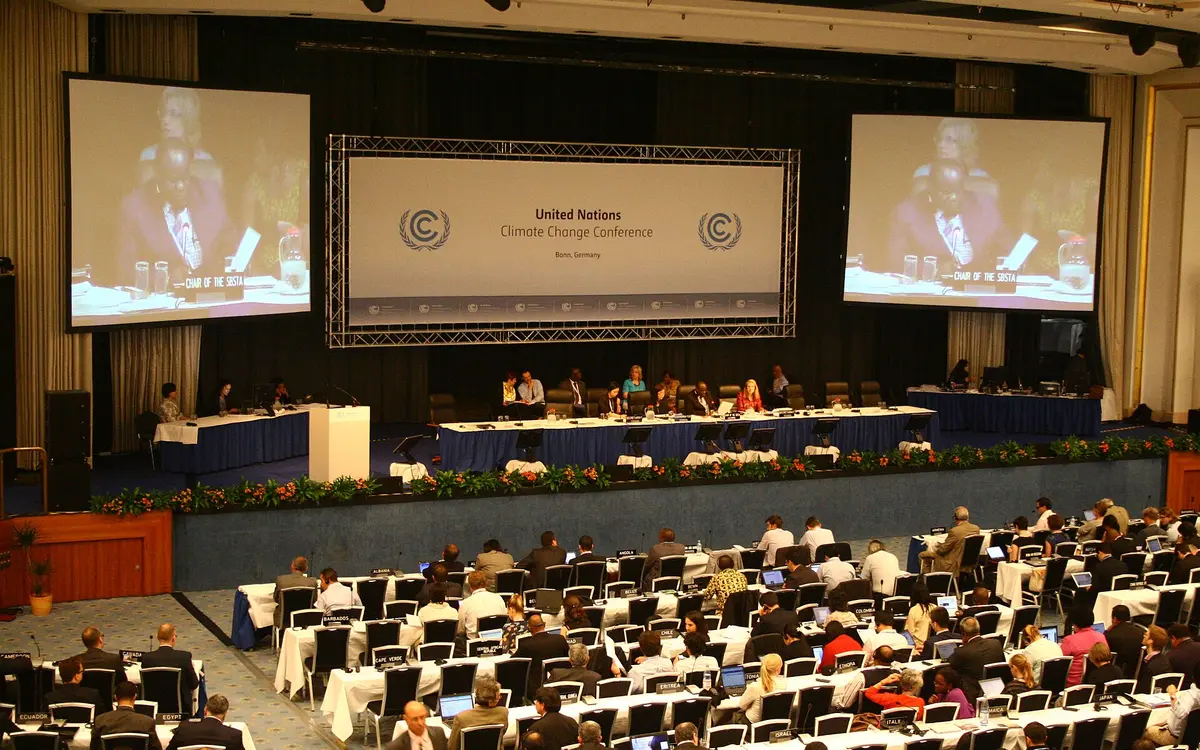
The Climate Negotiations You Haven’t Heard Of — Why Bonn 2025 Matters
Why the Bonn climate talks shape the next phase of international climate action even though they receive less attention than COP meetings.