Full article · LinkedIn
I’m Sorry, but Your Smart Thermostat Won’t Save You
Consumer devices can reduce energy use, but they cannot substitute for the systemic changes climate policy requires.
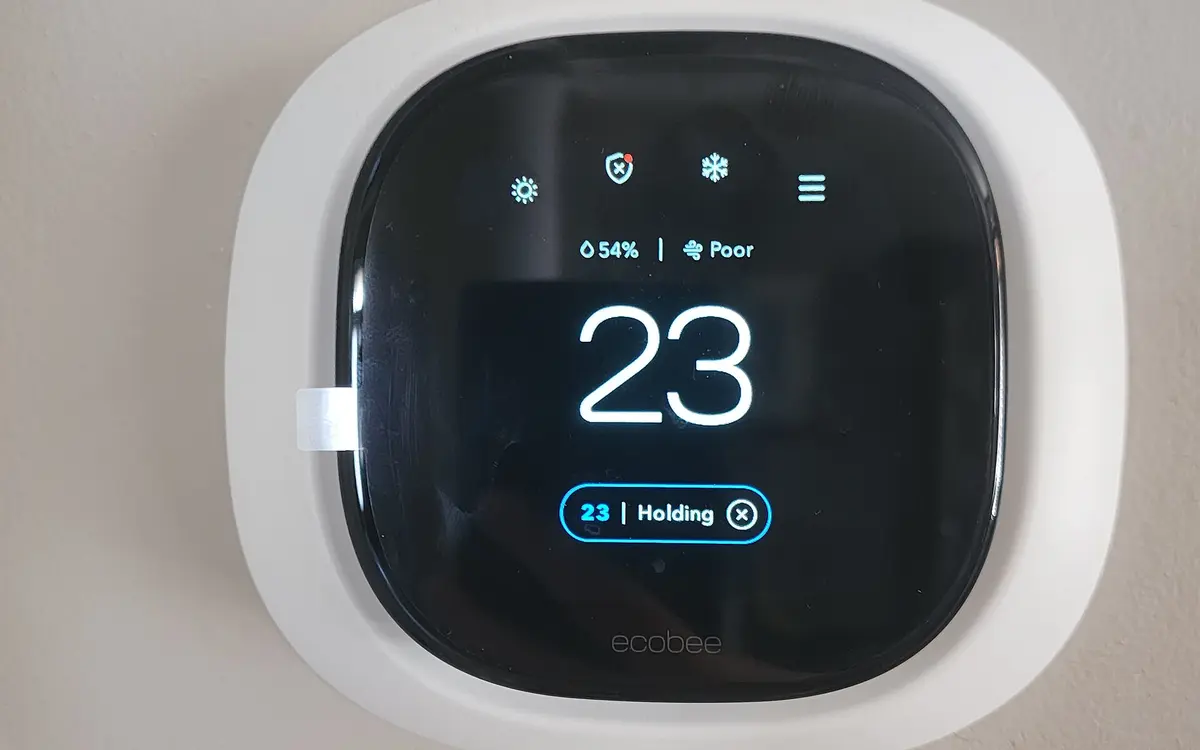
The Glowing Lie of Optimization
There’s a quiet seduction in the idea of progress without disruption. A better interface. A smarter home. A dashboard that applauds your reduced emissions. Your thermostat learns your habits. Your lights dim themselves. Your devices whisper comfort, and call it virtue.
We’re told that this is climate action—that small automations, layered over daily life, will sum into something larger. That the path to sustainability is not political, or structural, or collective—but technological, purchasable, and personal.
This is the lie. Because your smart thermostat won’t save you. And neither will your app-controlled outlets, your solar backpack, or your $80 reusable water bottle with Bluetooth built in. These aren’t solutions. They’re signals. They let us feel like we’re participating in change—without ever questioning the systems that created the crisis in the first place.
Efficiency Isn’t the Same as Impact
Let’s talk about what these devices actually do. Google Nest claims its thermostat reduces heating costs by 10–12% and cooling costs by up to 15%. Independent studies suggest a smaller number—often closer to the lower end of that range, at ~8-10%, depending on climate, user behavior, and baseline inefficiencies.
That’s not nothing. But it’s not transformative either.
More importantly, these gains often evaporate over time. People fall back into comfort. Or they overcompensate: a slightly more efficient AC becomes an excuse to keep it on longer. This is the rebound effect, and it’s well-documented—efficiency doesn’t always reduce consumption. Sometimes, it enables it.
A smart thermostat might save a few hundred kilowatt-hours a year. It won’t decarbonize your grid. It won’t seal your windows. It won’t change what kind of energy powers your home in the first place.
The Fantasy of the Green Consumer
This is part of a larger narrative—the dream of the optimized consumer. Buy better. Track your impact. Reduce your footprint through apps and upgrades.
This fantasy sells two myths:
First, that the climate crisis can be solved without political will. Second, that responsibility lies with the individual.
Consumer tech companies have become fluent in moral marketing. Your fridge can now tell you how sustainable your leftovers are. Your toothbrush tracks water use. Everything is gamified. Everything is designed to reward the illusion of control.
But these tools operate downstream. They don't challenge the utility company still burning coal. They don’t fix the building codes that allow drafty homes to keep being built. They don’t change the fact that 100 corporations are responsible for over 70% of global emissions.
They help you navigate a broken system—but they do not repair it.
Optimization for the Few
Even within that illusion, access is uneven. These tools are for those who can afford them: homeowners with app-connected HVAC systems, modern insulation, and time to track and tweak.
Most people aren’t in that situation.
Millions rent. Millions live in buildings they can’t upgrade, tied to energy systems they don’t control. For them, the promise of a smart home is out of reach—not just economically, but structurally.
So when we glorify green consumer tech as the future, we draw a line: between those who are empowered to participate in “personal climate solutions,” and those who remain trapped in inefficient, under-resourced, fossil-fueled living conditions. Climate privilege becomes yet another axis of inequality.
From Symbol to System
It’s not that smart thermostats, smart meters, or smart plugs are bad. They’re not. In the right context, they’re helpful. They can reduce waste. They can save money. They can support broader strategies.
But they are not strategies. They are tools. Tools that only matter when paired with systemic transformation.
A device that saves 10% on your heating bill isn’t a fix if your heating source is still natural gas. A light sensor doesn’t matter if your electricity comes from a coal plant. A home battery doesn’t help if the home itself is uninsulated.
We cannot automate our way out of ecological collapse. We cannot optimize our way to justice.
The Comfort Trap
What these tools offer is reassurance. They reduce friction. They make you feel better about living the same life, using slightly less. They whisper, “You’ve done enough.”
That’s dangerous.
Because what we need now isn’t comfort. It’s disruption. Discomfort. Decarbonization. Reinvestment in public systems. A shift away from individual tech solutions and toward collective, enforceable change.
The climate crisis is not a UX problem. It’s not something you solve in the settings menu. It’s not a brand choice.
It’s political. It’s material. And it demands more than interface tweaks.
Use the Thermostat—But Don’t Stop There
By all means, buy the thermostat. Let it track your usage. Let it save you some money. Let it shave a little carbon off your monthly bill.
But know what it is: a convenience, not a revolution.
And then go further. Demand building policy that mandates efficiency retrofits. Fight for public investment in clean energy. Support laws that hold utilities accountable. Join mutual aid projects and climate coalitions. Work where the leverage actually lives.
Because the thermostat isn’t the solution. It’s the beginning of a sentence. It’s what you install before you start doing the real work.
And the real work is harder, louder, and much more urgent than anything you can configure on your phone.
About this project
See the assignment, process, and my contribution.
I researched and wrote the climate commentary independently.
Related work
Continue through the subject.

Carbon Offsets Are Dead. Long Live Carbon Insetting.
Why carbon offsets have lost credibility—and why investing inside a company’s own value chain may be more accountable.

How Artificial Intelligence Is Reshaping Corporate Sustainability
AI has environmental costs, but it is also changing how companies measure, model, and manage sustainability work.

How Much Did Katy Perry’s Rocket Ride Really Cost the Climate?
A closer look at the environmental footprint behind a brief celebrity spaceflight and the spectacle surrounding it.