Full article · LinkedIn
The Climate Negotiations You Haven’t Heard Of — Why Bonn 2025 Matters
Why the Bonn climate talks shape the next phase of international climate action even though they receive less attention than COP meetings.
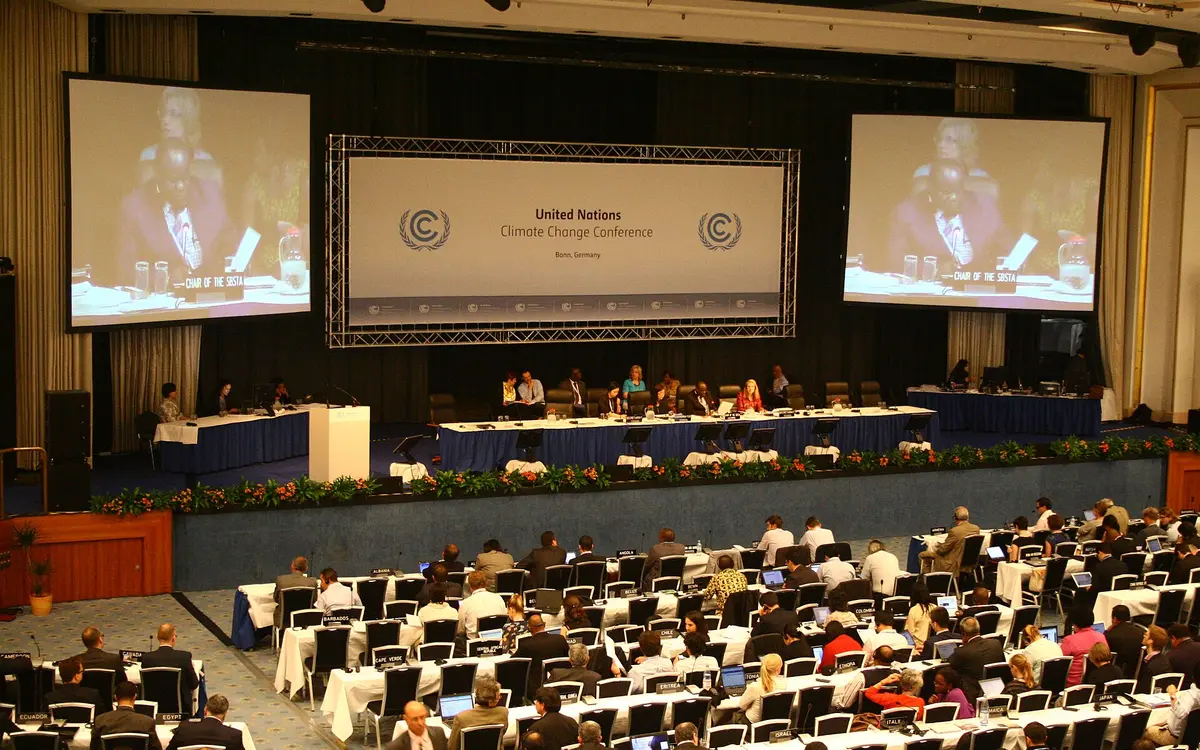
When it comes to climate negotiations, most of the world tunes in only once a year. Cameras pan over delegates in suits, pledges are made with careful urgency, and headlines declare progress—measured in degrees, billions, or broken promises. These are the COP summits, held each November. They’re loud. Political. And often, performative.
But the real work? That begins in June. In Bonn.
From June 16 to 26, negotiators from nearly every country on Earth are gathering not to make speeches, but to write the fine print. The 2025 Bonn Climate Conference—technically called SB62, short for the 62nd sessions of the Subsidiary Bodies—is where the scaffolding of COP30 is being built. What happens here doesn’t trend on social media. But it determines whether the world arrives in Belém, Brazil this November with a draft to sign—or a mess to untangle.
These are the negotiations that few outside climate circles ever hear about. But they shape the policy that will decide what climate finance means after 2025, how losses are compensated in climate-vulnerable nations, and whether market-based climate solutions can be trusted.
Bonn is where ambition gets parsed. Where it’s bracketed, debated, diluted, or—if we’re lucky—delivered.
The Tasks on the Table
SB62 isn’t about new promises. It’s about making existing ones possible. And this year, the stakes are higher than usual.
By the end of COP30, countries are expected to adopt a New Collective Quantified Goal (NCQG) on climate finance—a successor to the $100 billion annual pledge first made in Copenhagen. That goal expired in 2020. The world is still behind. Now, Bonn must help define what comes next. Is the new goal $200 billion? $400 billion? Should it count private finance leveraged by public dollars? Or only direct, grant-based support? Who pays—and how much—isn’t just a financial question. It’s a political one.
Then there’s the Loss and Damage Fund, a hard-won outcome of COP28 that’s still waiting for structure. Bonn’s role is to draft interim procedures: how the fund is governed, who receives money, and how quickly. For island states and low-income nations already experiencing irreparable losses—flooded farmland, displaced communities, cultural erasure—the difference between a functioning fund and a stalled one is measured in human cost.
Other negotiations—like rules for international carbon trading under Article 6, or operational metrics for the Global Goal on Adaptation—may feel technical. But they are what turn ambition into architecture. Without them, climate action remains vague. Unbankable. And ultimately, delayed.
The Flashpoints That Could Fracture Consensus
What makes Bonn unique isn’t just its technical depth—it’s the political choreography beneath the surface. The United States and the EU are pushing for a finance goal that leans on private-sector mobilization, while developing countries, led by the G77 and China, want clearer guarantees of public funding. Small island states are demanding that loss and damage money flow directly to affected communities—not through existing institutions that have failed them.
Even within these blocs, there are fractures. Some Latin American countries want stronger carbon market flexibility under Article 6. Others, like African nations and the AOSIS coalition, are wary of loopholes that could allow emissions to rise under the guise of "offsets."
Then there’s the issue of just transition. While the concept—ensuring a fair, equitable shift to a low-carbon economy—is widely endorsed, implementation risks becoming a placeholder unless defined, funded, and tied to real labor protections.
Success, in Bonn, isn’t always measured in consensus. It’s measured in whether a draft decision can move forward without 200 sets of brackets.
The People to Watch
Brazil, as incoming COP30 president, plays a critical behind-the-scenes role this year. They’re expected to mediate key conflicts and prepare the negotiation floor for Belém. The EU continues to position itself as a bridge-builder—especially on carbon markets and finance—but faces pushback for excluding historical responsibility in finance formulas.
The United States is present and vocal, especially on transparency frameworks, but remains under scrutiny for failing to meet its own climate finance targets. China, meanwhile, stays strategically quiet—advocating for flexibility, protecting its non-Annex I status, and shaping the language around differentiation.
But it’s often the smallest countries—Fiji, Malawi, Barbados—that speak the clearest truth in the room. Because they don’t have the luxury of delay.
Why You Should Care About a Meeting You’ve Never Heard Of
This is where climate governance gets real. Not in the press briefings, but in the paragraphs of policy text negotiated line by line, word by word. It’s where finance pledges gain definition. Where adaptation stops being a buzzword and becomes a metric. Where "loss" and "damage" become categories in a funding mechanism—not just words in a speech.
And perhaps most importantly: Bonn determines whether Belém becomes a success—or a stage for another set of vague commitments wrapped in political theater.
If the world wants progress in November, it starts in June. Quietly. Systematically. In a German conference center where the future is negotiated in clauses.
About this project
See the assignment, process, and my contribution.
I researched and wrote the policy explainer for a general professional audience.
Related work
Continue through the subject.
Carbon Offsets Are Dead. Long Live Carbon Insetting.
Why carbon offsets have lost credibility—and why investing inside a company’s own value chain may be more accountable.

How Artificial Intelligence Is Reshaping Corporate Sustainability
AI has environmental costs, but it is also changing how companies measure, model, and manage sustainability work.
The Impact of Climate Change on Harmful Algal Blooms in the Genesee–Finger Lakes Region
A nine-county review connecting harmful algal bloom reports with precipitation, temperature, lake history, and watershed runoff conditions.