Research question and data sources
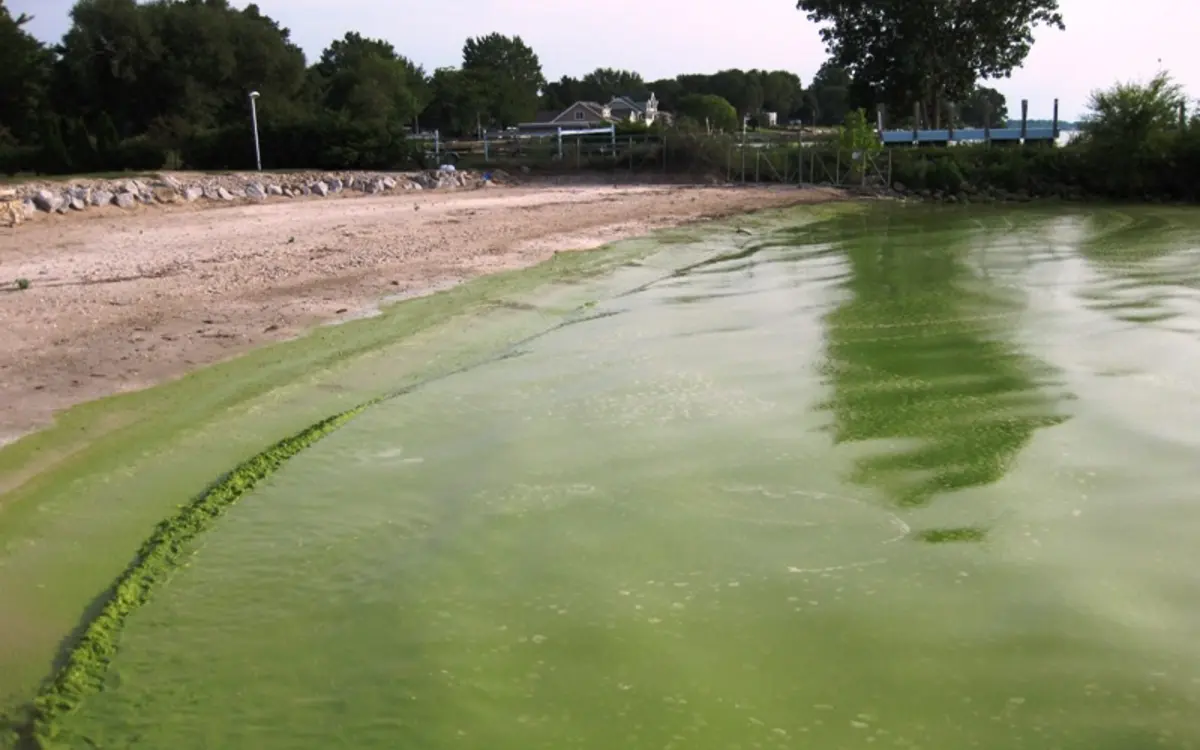
The project asked whether recent regional climate patterns align with conditions known to favor HABs, which counties and lakes show the greatest reported burden, and whether surrounding soils could increase nutrient runoff risk.
- NYSDEC harmful algal bloom reports from 2020–2024
- NOAA precipitation and temperature records and long-term anomalies
- USDA Natural Resources Conservation Service Web Soil Survey data
- Regional lake characteristics, bloom recurrence, and reported cyanotoxin context
Key findings
- Mean annual individual reports increased from about 36 to 222 between 2020 and 2024.
- Yates, Seneca, and Ontario counties emerged as reported algal hotspots relative to the other six counties.
- Precipitation anomaly and individual report frequency showed a Pearson correlation of approximately r = 0.77.
- Seneca, Canandaigua, and Cayuga were classified as high-severity problem lakes, with five-year report averages of 189, 113.2, and 107 respectively.
- High-severity lakes were commonly surrounded by Group D and dual-classification soils with limited infiltration and higher runoff potential.
- Seasonal temperatures in hotspot counties repeatedly fell within a range favorable to Microcystis growth.
Interpretation, limits, and communication
The report interprets the regional pattern as an association among changing climatic conditions, nutrient dynamics, watershed characteristics, and reported HAB occurrence. Report counts can also reflect monitoring effort and public awareness, and a correlation does not establish that rainfall independently caused the observed blooms.
My role included defining the regional comparison, collecting and organizing the datasets, classifying lakes and soil runoff potential, analyzing the trends, writing the report, and presenting the findings for a professional environmental audience.
My role
I conducted the regional analysis and scientific communication work for the Climate Solutions Accelerator in the Genesee–Finger Lakes region.