Full article · LinkedIn
Sustainable585: Issue #5 — Where the Systems Hold, Quietly
A regional dispatch on environmental research, local projects, and the quieter systems work happening across the 585.
June 1, 2025: Biweekly Environmental Dispatch from Sustainable585
Creekbed Curriculum – The 33rd Monroe County Envirothon
Ellison Park, May 22.
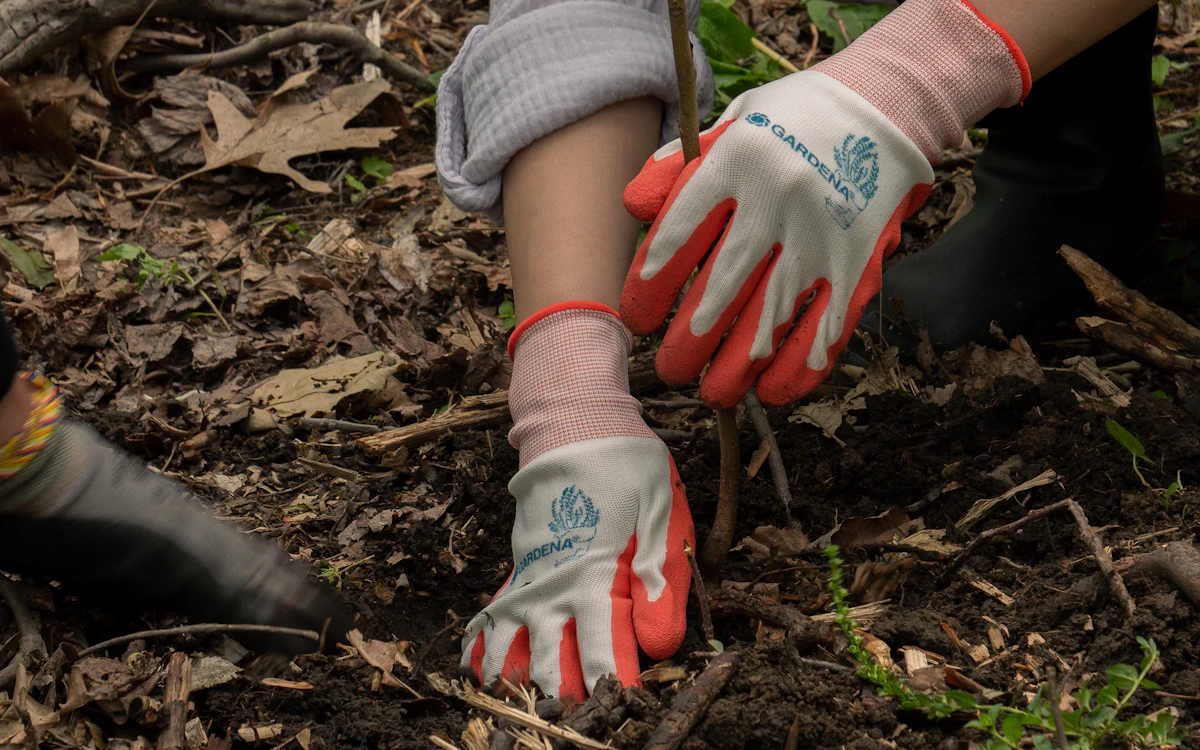
The Monroe County Soil & Water Conservation District hosted its 33rd annual Envirothon, a high school competition rooted in field science and hands-on ecological problem-solving. Nineteen teams from six area schools spent the day identifying tree species, interpreting soil structure, testing water quality, and answering scenario-based questions about this year’s theme: forest stewardship.
The event wasn’t promotional. There were no Instagram filters or inflatable mascots. It was clipboards, rain boots, and natural infrastructure. It was students crouching over soil cores, cross-referencing pH with land use charts, scanning the creek for macroinvertebrates that indicate water health. The winning team advanced to the statewide competition at SUNY Cortland the following week.
The winner of this event will move on to the National Envirothon at Mount Royal University in Calgary, Alberta, Canada on the week of July 20.
But the broader significance wasn’t who won. It was what was normalized. Teenagers out of the classroom and in the watershed. Youth learning not just the vocabulary of ecosystems, but their mechanics. Climate literacy not as ideology—but as land-based fluency. This is what building capacity looks like when it isn’t called that.
Plastic That Heals – RIT’s Self-Repairing Photopolymer
Published May 23, 2025
In a material science lab at Rochester Institute of Technology, a team led by Ph.D. candidate Vincent Mei announced the development of a self-healing 3D printing material. The polymer, when heated, can close microfractures and restore its mechanical strength.
Applications are broad: aerospace, medical devices, consumer electronics. But the sustainability implications are clear. Less waste. Longer product life. Less demand for extraction and energy-intensive re-manufacturing.
This isn’t the kind of research that makes local news. But it should. Rochester is home to a growing network of climate-tech researchers, and materials science is one of the quiet engines of the transition economy. If the future is going to be circular, it will depend on innovations like this—durable, adaptable, regenerative.
(Mei, 2025). Image Courtesy of 3DPrintingIndustry
The Clover Rebellion – No Mow May Grows Quietly
Throughout May, 2025.
Neighborhoods in Brighton, Pittsford, and parts of Rochester looked a little scruffier this spring, and that was by design. No Mow May—a movement encouraging homeowners to skip lawn maintenance for the sake of pollinators—found new traction this year. Community members installed yard signs from organizations like Color Brighton Green and Pollinator Pathway. Local Facebook groups posted bee sightings like weather updates.
The logic is simple: dandelions, violets, and clover are among the earliest food sources for pollinators coming out of hibernation. By holding off on mowing, residents give bees, butterflies, and other insects a critical head start. What looks unkempt is, in fact, habitat.
But the campaign also raised questions. Some towns, including Irondequoit, fielded complaints about unruly lawns and weed ordinances. Others started discussing whether zoning codes might need to change to support this kind of micro-scale ecological care. What began as a personal gesture has become a quiet civic experiment: Can lawn culture change without being legislated? Can suburbia adapt to ecological urgency without needing to call it that?
Solar Above the Fold – Monroe County Issues Rooftop RFP
Released May 29.
Monroe County’s Department of Environmental Services published a new Request for Proposals (RFP) for solar energy installation on county-owned rooftops. Target buildings include facilities like the County Office Building, Fleet Center, and several public works sites. Vendors are invited to design, install, and maintain PV systems under long-term power purchase agreements.
On paper, this is just a procurement document. But behind it is a shift: public infrastructure as energy-generating assets. The county is no longer just a consumer of electricity. It’s positioning itself—however slowly—as a producer.
The RFP builds on the momentum of Rochester’s own municipal solar plans announced earlier in May. Together, these efforts suggest a broader transition from symbolic sustainability to operational integration. It’s not just about optics. It’s about baseload. And budgets. And an increasingly obvious truth: rooftops have jobs to do.
Networking Without Name Tags – Green Drinks in Geneva
May 29, Lake Drum Brewing
In the back room of a craft brewery off Exchange Street, dozens gathered for beer and climate talk. This wasn’t a formal workshop. There was no agenda. But the conversations ranged from composting legislation to carbon sequestration in vineyards to how solar co-ops might scale in Ontario County.
Green Drinks is a monthly series hosted by the Climate Solutions Accelerator—a come-as-you-are networking event for sustainability professionals, students, entrepreneurs, and activists. This edition in Geneva marked a rare convergence of rural organizers, small business owners, and academic researchers, all drawn together by proximity and purpose.
These meetings don’t produce press releases. But they build the social muscle memory needed for future coalitions. For grant partnerships. For faster response times. In a region as spatially and economically diverse as the Finger Lakes, sometimes the work is just showing up—again and again—until trust becomes infrastructure.
Still Water, Good Air – A Rare Quiet from the Climate
Final week of May.
Sometimes, the most important updates are the absences. There were no harmful algal blooms reported in Finger Lakes waters. No extreme heat. No shoreline flooding. Air quality across Rochester and surrounding counties remained in the “good” range. Lake Ontario’s levels held within normal springtime thresholds.
These aren’t accidents. They’re outcomes—of infrastructure working, of precipitation patterns cooperating, of the complicated equilibrium that climate scientists increasingly describe as “resilience windows.”
But these moments are fragile. Summer is coming. So are droughts, blooms, heatwaves. Still, for one span of two weeks, the region caught its breath. And this quiet, this time, was worth documenting.
This Is What It Looks Like
This is what sustainability looks like in the middle distance. Not a pivot. Not a campaign. A series of distributed gestures—some institutional, some incidental—held together by intention and proximity. It doesn’t trend. It doesn’t trend because it doesn’t need to. It accumulates.
This was May 19 through June 1. A polymer that heals. A creek that teaches. A policy that rests. A rooftop that prepares.
The work goes on. And we’ll be back to document it.
—Paul
About this project
See the assignment, process, and my contribution.
I independently researched, curated, wrote, and published the Sustainable585 dispatch.
Related work
Continue through the subject.
Sustainable585: Issue #4 — Where the Water Rises
A regional roundup tracing sustainability work, local decisions, and changing water conditions across greater Rochester.
Sustainable585: Issue #3 — Biweekly Regional Roundup
Earth Day, Arbor Day, heavy rain, and collective sustainability work across the 585 in early May.
Beyond Fast Fashion — Five Rochester Brands Leading the Local Sustainability Movement
A look at five Rochester-area businesses approaching clothing, materials, and local sustainability differently.