Full article · LinkedIn
Think Your Water Is Clean? Climate Change Might Be Proving You Wrong
What harmful algal blooms can look like, why climate conditions matter, and why apparently clear water is not the whole story.
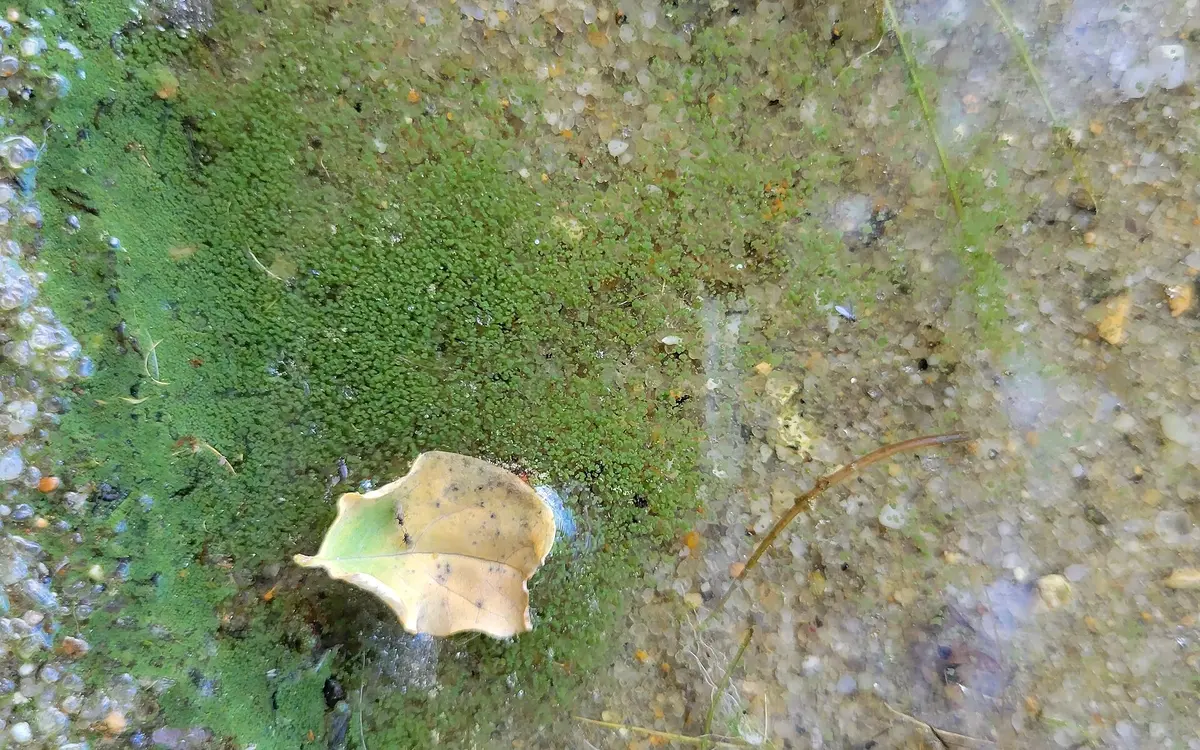
We imagine climate change in spectacle. A glacier splits and falls into the sea. A fire tears across a hillside in California or Greece. The imagery is cinematic, broadcast-ready. But not all collapse looks like disaster. Some of it is slow. Some of it is green. And some of it begins in silence.
Across coastlines and inland lakes, another climate symptom has been quietly gaining ground. It does not announce itself with fire or flood, but with the slow murk of water turned unfamiliar. Harmful algal blooms—long blamed on fertilizer and runoff—are no longer just a story of excess nutrients. They’ve become a story of rising heat. Of disrupted seasons. Of oxygen pulled from a lakebed by organisms that shouldn’t have lasted this long, in water this warm, for a season that never really ended.
This isn’t a future threat. It’s already reshaping the shallows of Lake Erie. It’s already surfacing in shellfish along the Pacific coast. It’s already killing seabirds in Australia, and increasing rates of Parkinson's in Guam. Climate change isn’t just warming the air above us. It’s rewriting the biology of both water and humanity itself.
It’s not just melting ice. It’s feeding algae.
When Lakes Turn Lethal
Cyanobacteria are some of the oldest life forms on the planet. They’ve adapted through ice ages, extinctions, oxygen revolutions. But they are opportunists. In the right conditions—warm, still water with just enough phosphorus or nitrogen—they rise. Some, like Microcystis or Dolichospermum, release neurotoxins and liver toxins potent enough to kill animals or sicken entire communities. Others don’t produce toxins, but still strip a lake of oxygen until the fish die gasping at the surface.
For decades, these blooms came and went with the seasons. Summer would bring growth. Autumn would bring collapse. But warming has fractured that rhythm. Across the northern U.S., lakes are now ice-free weeks earlier than they were in the 1970s. In the Great Lakes, ice cover has dropped more than 25% since 1973. Sunlight enters earlier. The water stratifies sooner. And the cyanobacteria arrive not as visitors—but as residents.
They thrive at the surface, floating just beneath the light. Below them, oxygen sinks vanish. Fish die not from poison, but from breathlessness.
Rain as Catalyst, Stillness as Trap
Precipitation, too, has changed its pattern. Rain arrives now in pulses—sudden and brutal. It strips the phosphorus from farm fields and lawns and drains it into the nearest stream. But where that runoff might once have been flushed by a series of gentle storms, it now sits in stagnant heat.
Storm. Sun. Stagnation. That’s the new choreography.
We’ve already seen what it yields. In 2011 and again in 2015, Lake Erie experienced massive toxic blooms, fed by spring floods and summer calm. In 2018, Lake Superior—a lake once considered too cold for blooms—turned green in its shallow bays. These weren’t outliers. They were previews.
Coastal Systems in Collapse
The same principles apply in saltwater, though the players change. In the ocean, dinoflagellates and diatoms dominate the bloom scene. Elevated CO₂ gives them a competitive edge. Acidification weakens the grazers that once kept them in check. Sea-level rise expands the warm, shallow margins where water stratifies and oxygen slips away.
In 2025, a marine heatwave off South Australia triggered a bloom of Karenia mikimotoi that extended for 150 kilometers. Over 200 marine species died—fish, invertebrates, birds. The food web cracked under the weight of a bloom that didn’t belong.
Along the U.S. West Coast, domoic acid-producing blooms have forced the closure of shellfish fisheries, costing communities tens of millions. These events aren’t flukes. They’re symptoms.
What the Bloom Leaves Behind
The damage of a bloom is rarely contained to the water. It spreads into infrastructure, economy, health.
In 2014, a toxic bloom in Lake Erie contaminated Toledo’s water supply, leaving 500,000 residents without drinking water. In Oregon, more than 40 people fell ill in 2024 from shellfish contaminated by algal toxins. That outbreak was the worst in the state’s recorded history.
The economic costs pile up. Fisheries close. Tourists stay home. Cattle die drinking from farm ponds. Property values drop. The damage isn’t always immediate. But it accrues. And it lingers.
Even when no one gets sick, trust erodes. A lake no longer signals safety. A shoreline no longer promises summer. What once reflected the sky now reflects something else: loss.
The Future Requires a New Framework
The traditional response to HABs—reduce nutrients—remains necessary. But it is no longer sufficient. What we are facing is no longer a runoff issue. It is a systems issue. A climate issue. A warning.
The path forward begins with acknowledging that our baselines are gone.
We need nutrient thresholds recalibrated for a warmer, stormier climate.
We need satellite forecasting, real-time toxin sensors, and regional HAB early-warning networks.
We need wetlands rebuilt and riparian buffers restored—not as aesthetic features, but as infrastructure.
And we need to classify HABs as climate-linked hazards. Not just a water quality problem, but a public health threat.
Climate adaptation must include water. Because the next emergency may not come with wind or fire. It may come with stillness. And a bloom.
About this project
See the assignment, process, and my contribution.
I researched and wrote the environmental-health explainer independently.
Related work
Continue through the subject.
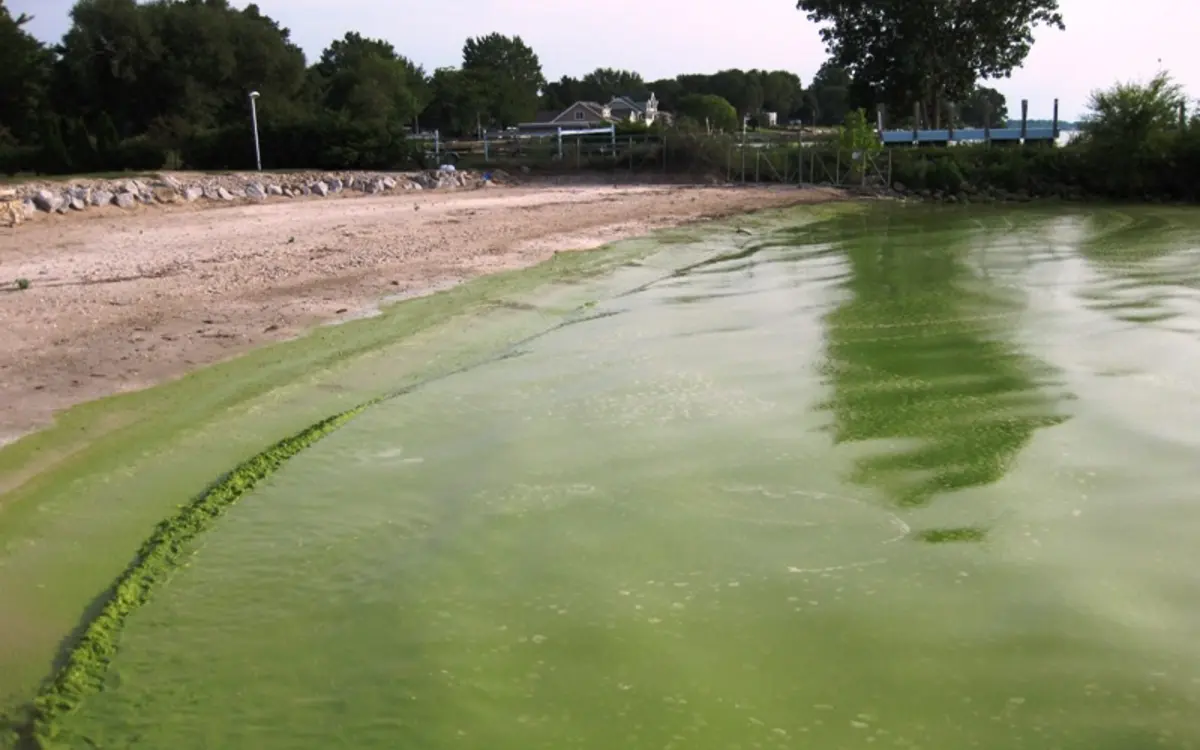
The Impact of Climate Change on Harmful Algal Blooms in the Genesee–Finger Lakes Region
A nine-county review connecting harmful algal bloom reports with precipitation, temperature, lake history, and watershed runoff conditions.
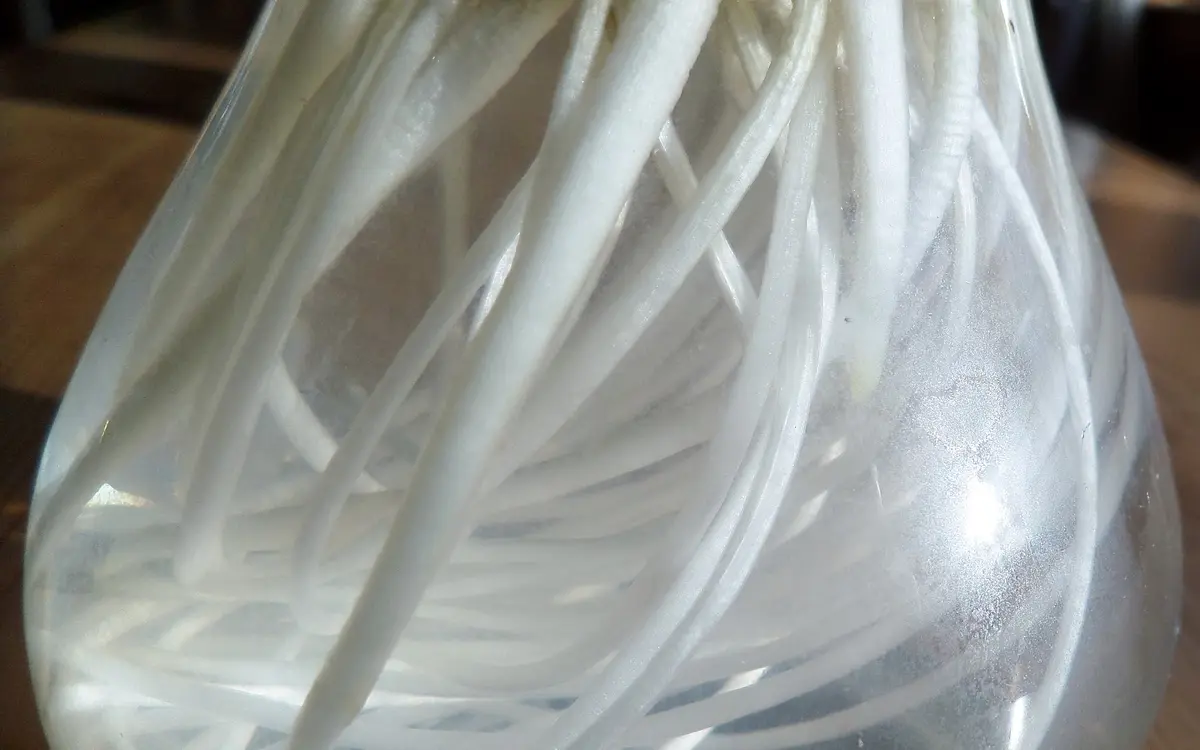
Rhizofiltration of an Induced Microcystis Bloom Using Water Hyacinth
A constructed-wetland experiment testing whether water hyacinth could remove bloom-supporting nutrients from an induced Microcystis system.
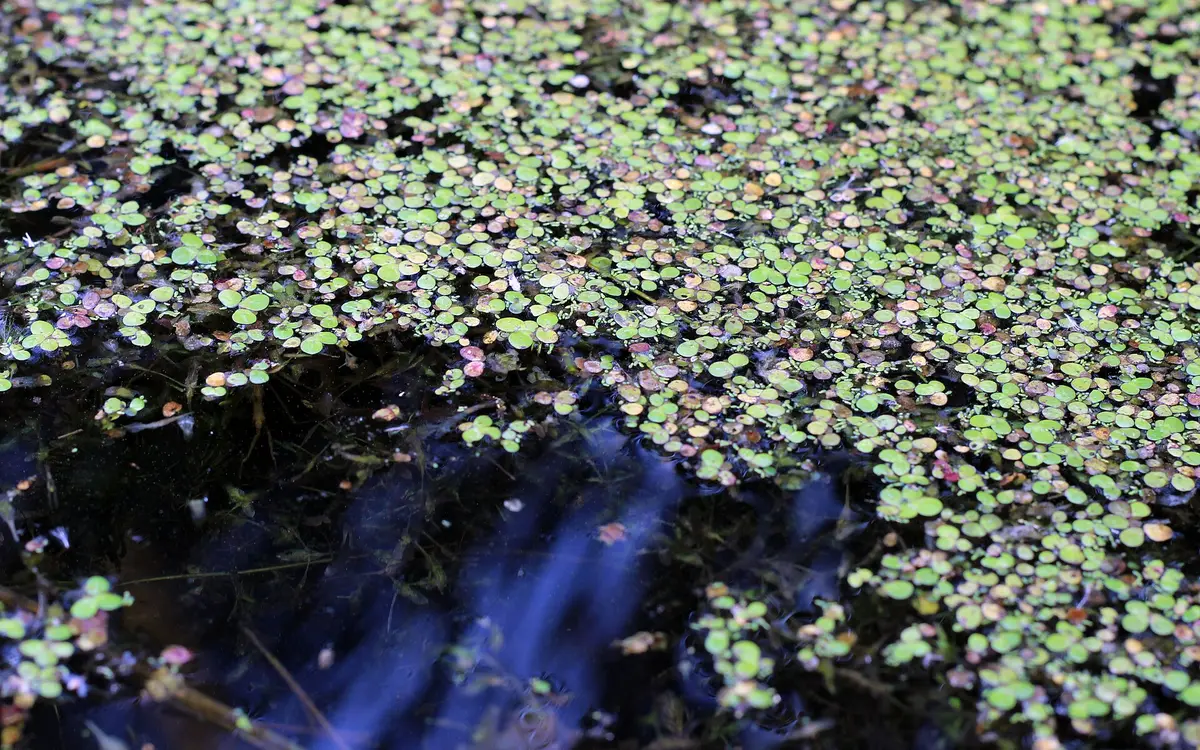
Phytoremediation of North American Harmful Algal Blooms Under Long-Term Feasibility Constraints
A feasibility-centered review comparing water hyacinth, star duckweed, and parrot’s feather for bloom suppression and cyanotoxin removal.